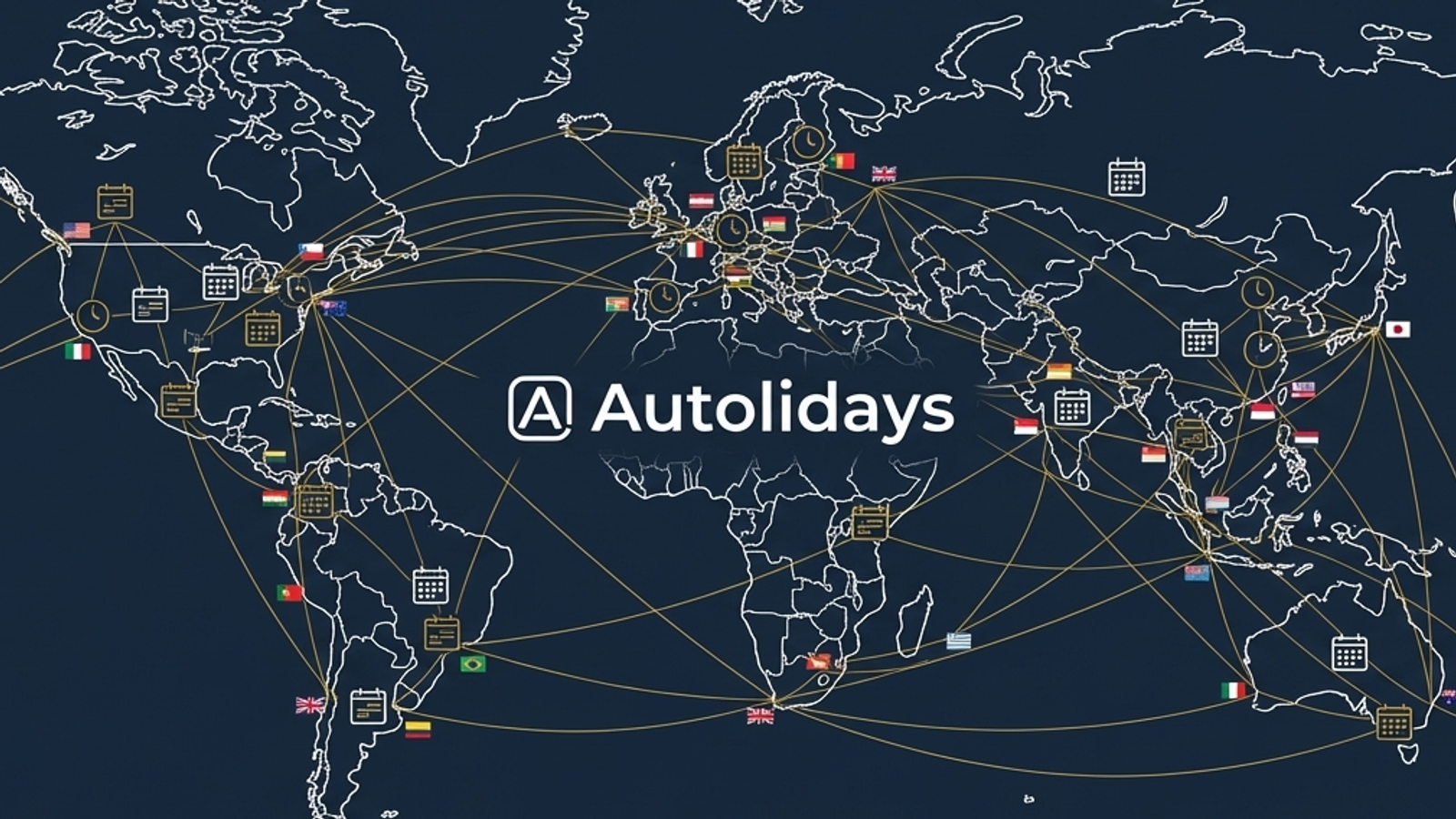
When your team spans three countries, you deal with three different holiday calendars. When it spans ten countries, you deal with ten. And when nobody tracks these differences, you end up scheduling an all-hands meeting on Diwali or a project deadline on Chinese New Year.
Managing public holidays for international teams is one of those problems that seems simple until you actually have to do it. Here is what works, what does not, and how to make it painless.
The Real Cost of Ignoring International Holidays
The most common approach to international holidays is no approach at all. Teams operate on the assumption that everyone knows when everyone else is off. This fails in predictable ways.
Meetings scheduled on holidays. A team lead in New York schedules a Monday standup, not realizing it is a bank holiday in the United Kingdom. Three people do not show up. The meeting gets rescheduled. Half a day of coordination is wasted.
Deadlines set on days off. A sprint ends on a Friday that happens to be a national holiday in India. The team members in India cannot deliver on time, but nobody adjusted the timeline because nobody checked.
Perception of favoritism. If the company defaults to US holidays and treats other countries' holidays as optional, international team members feel like second-class employees. This erodes trust and morale over time.
These are not hypothetical scenarios. They happen constantly in global organizations, and they are entirely preventable.
Strategy 1: Each Employee Follows Their Local Holidays
The simplest and most equitable approach is to let each team member observe the public holidays of their country of residence. Someone in France follows French holidays. Someone in Australia follows Australian holidays.
This is legally compliant in most jurisdictions, respects local culture, and is easy to explain. The downside is that total days off varies by country, and scheduling requires knowing each person's holiday calendar. This is the approach most distributed companies use, and it works well when combined with good calendar tooling.
Strategy 2: Unified Company Holidays Plus Floating Days
Some companies define a small set of universal company holidays (New Year's Day, for example) and then give each employee a bank of floating holidays they can use for their local observances. This creates shared days off while giving flexibility for cultural and religious observances. The downside is it requires HR infrastructure to track floating days, and employees may feel pressured to work on local holidays if they are not company-wide.
Strategy 3: Minimum Local Holidays Plus Floating Days
A hybrid approach: guarantee that every employee gets at least their country's public holidays off, then add a pool of floating days on top. This ensures legal compliance while providing extra flexibility. This is the gold standard for companies that can afford the administrative overhead. But regardless of which strategy you choose, the operational challenge remains the same: everyone needs to know who is off when.
The Calendar Visibility Problem
The strategy you pick matters less than whether your team's calendars actually reflect reality. If someone in Singapore is off for National Day but their Google Calendar shows them as available, meetings will get booked. Deadlines will be missed. And the person on holiday will come back to a pile of Slack messages asking why they did not respond.
Most companies try to solve this with shared spreadsheets or Notion databases listing holidays by country. These work in theory but fail in practice because they require manual maintenance every year, nobody checks the spreadsheet before scheduling a meeting, and they do not integrate with the tools people actually use to schedule.
The holidays need to be in the calendar itself, blocking availability, not in a reference document that people forget exists.
Making It Work With Autolidays
Autolidays was designed specifically for this problem. Each team member connects their Google Calendar and selects the countries whose holidays they observe. From that point forward, their public holidays appear as blocked all-day events, anyone checking their availability sees those days as busy, scheduling tools automatically route around holiday conflicts, and holidays update automatically each year with no maintenance.
For a team with members in the United States, Germany, and Japan, that means three different holiday calendars, all correctly reflected in each person's Google Calendar, with zero ongoing effort from managers or HR.
Practical Tips for International Holiday Management
Beyond tooling, here are practices that help international teams handle holidays smoothly:
Maintain a shared holiday awareness calendar. Even if individual calendars are blocked, having one view that shows all team holidays helps with sprint planning and project timelines.
Build buffer into cross-timezone deadlines. If a deadline falls within two days of a holiday in any team member's country, add a buffer day. This accounts for the pre-holiday slowdown and post-holiday catch-up that happens everywhere.
Communicate proactively about coverage. When multiple team members in a region share a holiday, designate coverage or communicate clearly that the team will be offline. Do not leave clients or cross-functional partners guessing.
Respect holidays equally. If the company celebrates US Thanksgiving with a company-wide message, do the same for Diwali, Lunar New Year, and other significant holidays observed by team members. Recognition builds inclusion.
Plan quarterly, not just weekly. At the start of each quarter, review the holiday calendars for all countries represented on your team. Identify weeks with reduced capacity and plan project milestones accordingly.
Stop Managing Holidays Manually
Every hour spent cross-referencing holiday spreadsheets is an hour not spent on actual work. Autolidays automates the tedious part, putting the right holidays in the right calendars, so you can focus on the human side of managing a global team.
Get started for free and give your international team the holiday visibility they deserve.